AI Attack Surface Management Platform
Client
AI Attack Surface Management Platform
Year
2026
With the rapid adoption of LLMs, MCP servers, AI agents, vector databases, and AI SDKs, organizations suddenly had hundreds of AI assets exposed across public infrastructure without realizing it.
Traditional security scanners were built for web applications and cloud infrastructure—not for AI systems.
At CloudSEK identified an emerging category: AI Attack Surface Management.
I led the design of AI Vigil, a platform that continuously discovers AI assets, identifies security risks unique to AI systems, and helps security teams understand, prioritize, and remediate them before attackers exploit them.
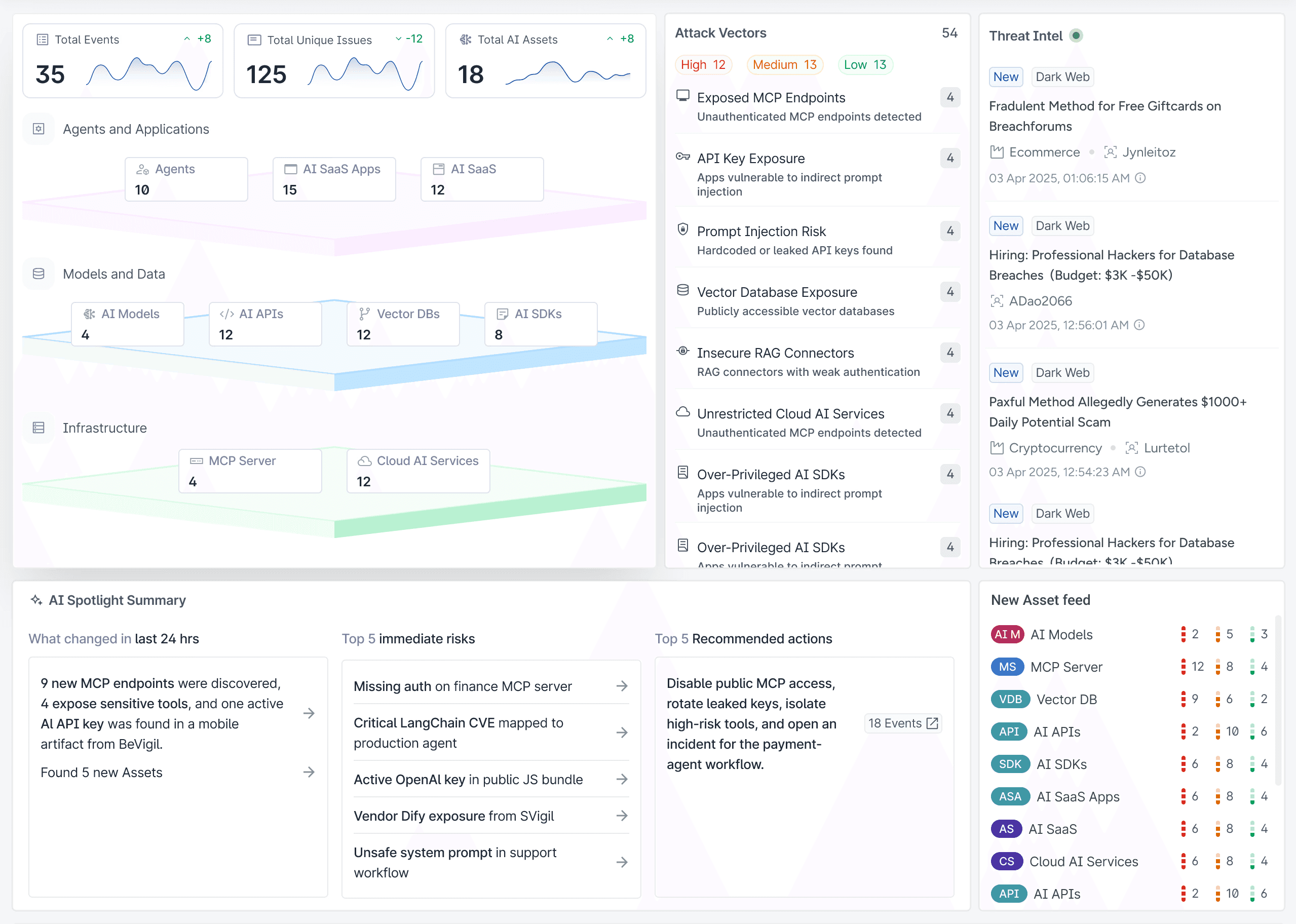
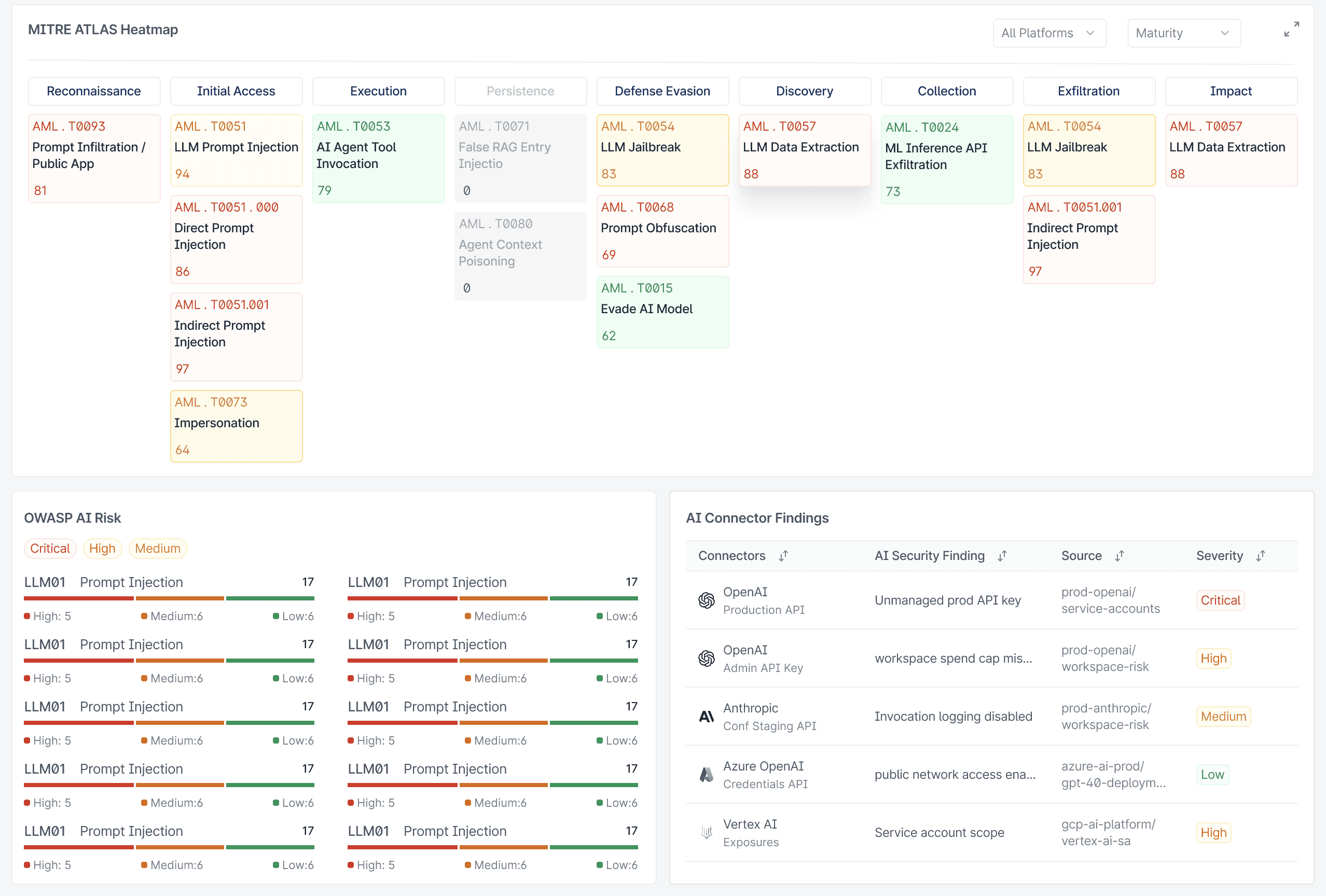
The platform combines public attack surface discovery, private AI connectors, AI-specific threat intelligence, and MITRE ATLAS mapping into one unified experience.
The Problem
Security teams had visibility into:
Cloud assets
APIs
Infrastructure
Mobile applications
But almost no visibility into:
MCP Servers
AI Agents
LLM endpoints
AI SDKs
Vector databases
Prompt injection risks
System prompt leaks
AI credentials
Agent permissions
These assets were growing rapidly but lived outside existing security workflows.
The biggest challenge wasn't simply finding AI assets.
It was helping security teams understand:
Which AI assets exist?
Which ones are risky?
Why are they risky?
What should be fixed first?
Research
We worked closely with
Enterprise security teams
Threat researchers
Internal AI security researchers
Existing CloudSEK customers
A common pattern emerged.
Security teams didn't want another vulnerability scanner.
They wanted:
a live inventory of AI assets
risk prioritization
AI-specific attack intelligence
contextual remediation
a single place to investigate incidents
The Design Challenge
Unlike traditional vulnerability products, AI Vigil had to combine multiple layers of information simultaneously.
For every AI asset we needed to surface
Infrastructure information
AI model information
MCP information
SDK usage
AI risks
MITRE ATT&CK mapping
OWASP LLM mapping
Threat Intelligence
Recommended fixes
Without overwhelming users.
The biggest design challenge became:
How do we simplify an incredibly technical security domain into something that is immediately understandable?
Design Goals
We aligned around five goals.
1. Give complete AI visibility
Users should immediately understand
how many AI assets exist
where they are deployed
what technologies they use
which ones are exposed
Connectors
Public discovery only tells half the story.
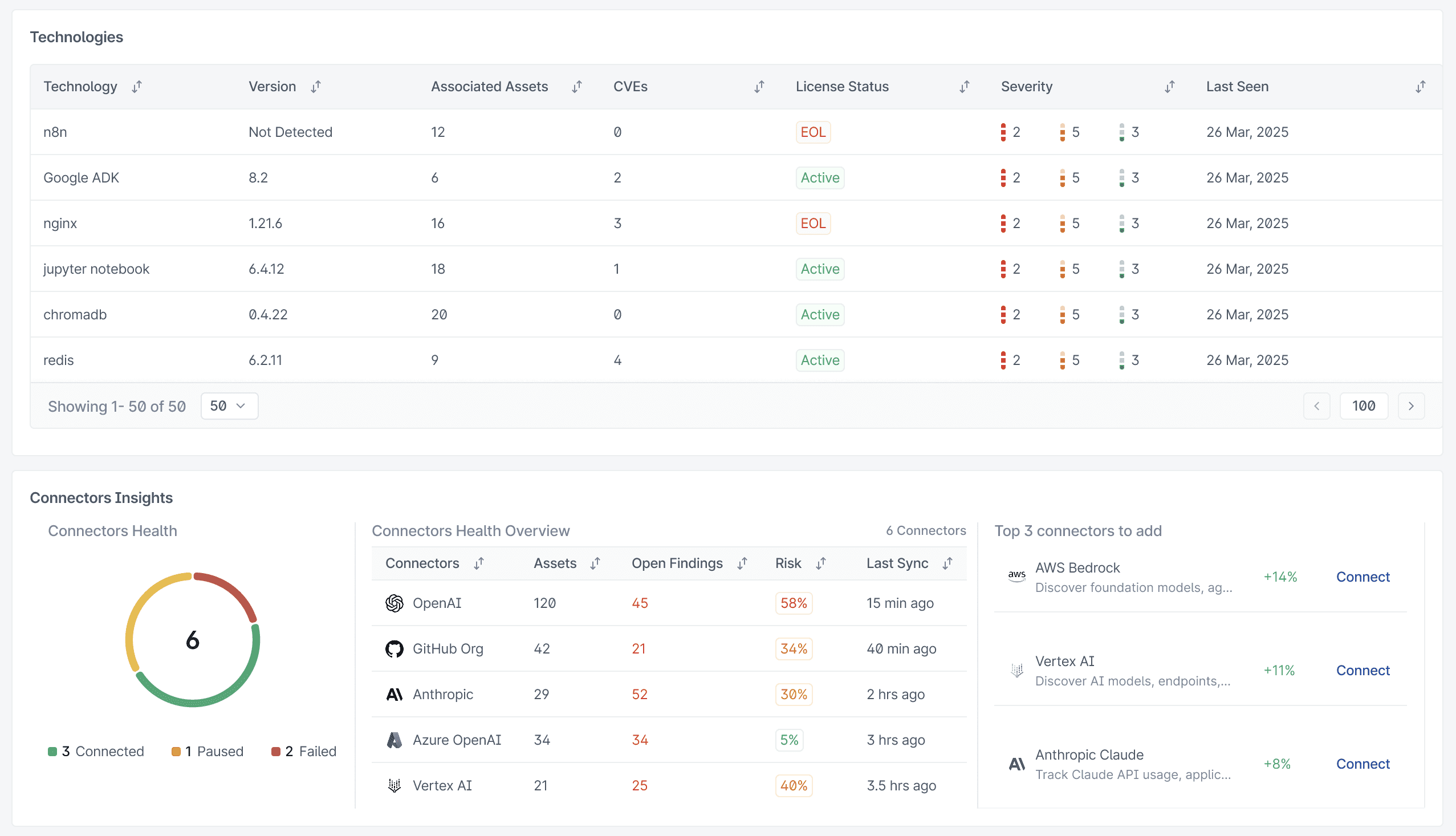
Organizations also needed visibility into internal AI deployments.
AI Connectors securely integrate with supported providers to inspect
AI deployments
AI APIs
Service accounts
Credentials
Configuration issues
Model permissions
without exposing source code.
AI Asset Explorer
Security teams often ask
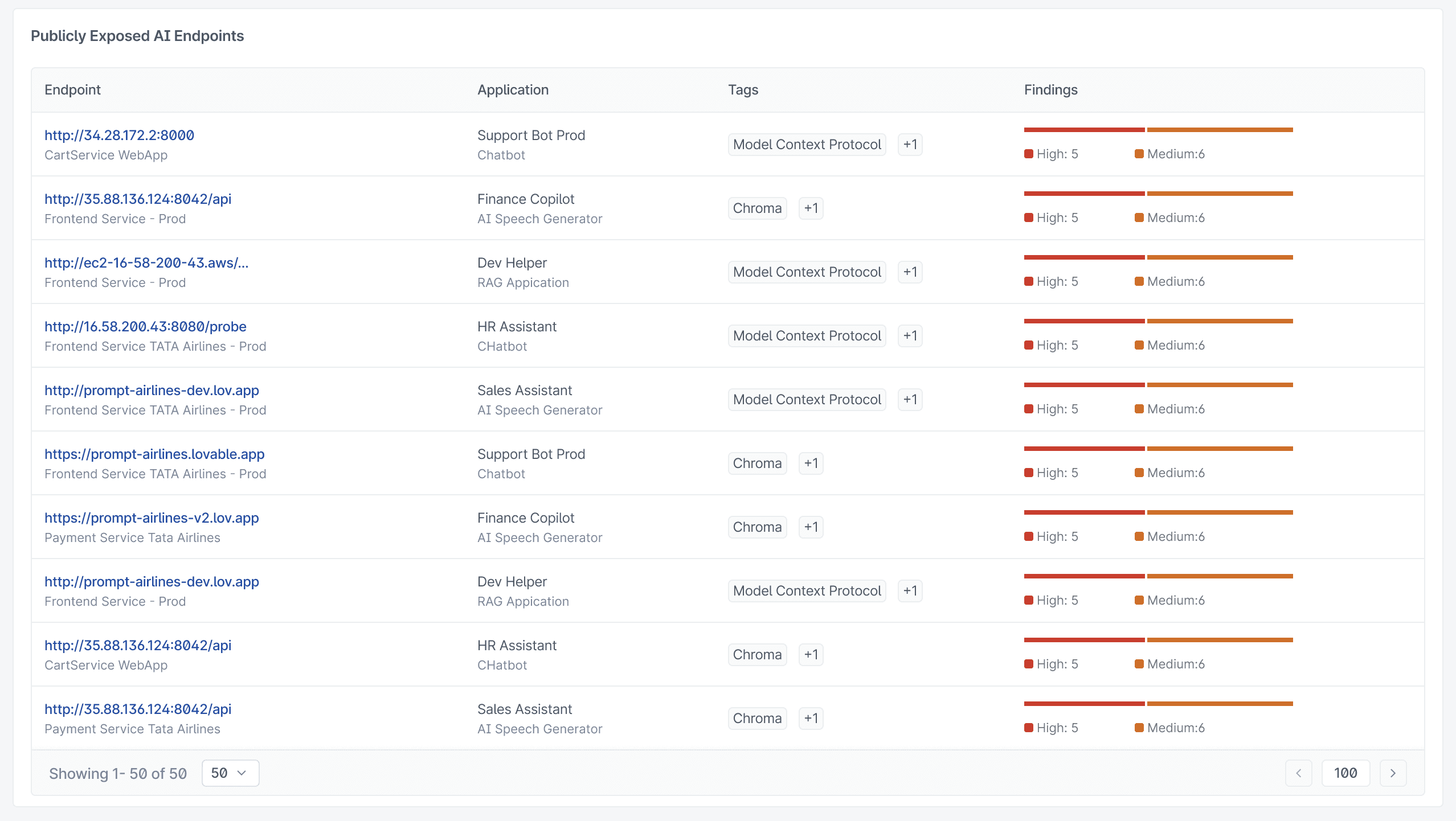
"Show me every AI endpoint exposed to the internet."
The asset explorer was designed as an investigation workspace.
Each asset provides
endpoint details
application ownership
associated technologies
detected findings
exposure level
making it easy to move from discovery to investigation.
Impact
AI Vigil established a completely new security category inside CloudSEK by extending attack surface management into AI ecosystems. The platform unified AI asset discovery, AI-specific threat intelligence, and guided remediation into a single workflow, enabling security teams to move from fragmented visibility to continuous AI risk monitoring. It also positioned CloudSEK to leverage its existing BeVigil, SVigil, XVigil, and Threat Intelligence capabilities as a cohesive AI security platform.
Key Learnings
Designing for AI security requires simplifying highly technical concepts without losing depth.
Effective dashboards prioritize decision-making over displaying more data.
Security analysts think in terms of investigation workflows, not individual vulnerabilities.
The right information architecture can make complex AI ecosystems feel navigable.
Emerging product categories demand new mental models rather than adapting existing security interfaces.
Scope of Work